How to sign off an email
Match the reader. Use the formality they use, keep the sign-off to one line, and put your name underneath. When you are unsure, "Best regards" works almost everywhere.
The end of an email has three parts, and each does a different job:
- The sign-off line, such as "Thanks" or "Kind regards", sets the tone of the goodbye.
- Your name, usually your first name once you are on first-name terms, and your full name in a first email.
- Your signature block: role, business, phone and website. More on that below.
There are dozens of ways to sign off an email, but three rules cover most of them. Mirror the other person: if they write "Cheers", you can too. Fit the sign-off to the ask: thanks for a favour, a gentle "speak soon" when a call is booked. And use only one: "Thanks, best regards" reads like you could not decide.
Professional email sign offs
When to use: first emails, new clients, proposals, quotes, anyone senior, and any message you would not mind being forwarded.
- Best regardsThe safe default for almost any business email.
- Kind regardsSlightly warmer; common in the UK and Australia.
- RegardsShort and neutral. Can feel cool on its own.
- BestBrief and friendly-professional. Fine for ongoing threads.
- Best wishesPolite and a little warmer than Best.
- All the bestGood when a conversation is wrapping up.
- SincerelyFormal. Suits cover letters and official requests.
- Yours sincerelyFormal letters where you know the reader’s name.
- RespectfullyFor officials, boards or a sensitive complaint.
- Looking forward to hearing from youWhen you genuinely expect a reply.
- Looking forward to working with youAfter a yes, before a project starts.
- Thank you for your timeAfter a meeting or a long read.
If you want one professional email sign off that works in every situation, use "Best regards". It is polite without being stiff and nobody will notice it, which is exactly what a sign-off should do.
Warm and friendly sign-offs
When to use: clients and partners you already know, ongoing projects, and replies to people who wrote to you warmly first.
- Warm regardsProfessional with a friendly edge.
- WarmlyFor clients you have a real relationship with.
- CheersCasual and upbeat. Reads differently by country.
- Talk soonWhen a call or next email is already planned.
- Speak soonThe same, a touch more British.
- Take careKind and personal, good for long-time clients.
- Have a great weekMonday and Tuesday emails.
- Enjoy your weekendThursday and Friday emails.
- See you ThursdayWhen a meeting is booked. Be specific.
- Until next timeNewsletters and regular updates.
Time-based sign-offs such as "Have a great week" feel personal because they are tied to the moment. Just make sure the day is right: a "Have a great weekend" sent on Monday morning reads like a template.
Thank-you sign-offs
When to use: when the reader has helped, answered quickly, sent something you asked for, or given you their time.
- ThanksShort, friendly and works almost anywhere.
- Thanks so muchWhen someone has done you a favour.
- Many thanksPolite and slightly formal.
- Thank youClear and sincere. Never wrong.
- Thanks againWhen you have already thanked them above.
- Much appreciatedQuick acknowledgement of help.
- Appreciate your helpWhen they solved a specific problem.
- With gratitudeFor real kindness, such as a referral.
- Thanks for your timeAfter a call, a demo or a long email.
- Thanks for the quick replyRewards a fast answer and keeps things moving.
A thank-you sign-off should match something real in the email. If nobody has done anything for you yet, a plain "Best" is more honest than "Many thanks".
Cold email and sales sign-offs
When to use: first-contact emails, follow-ups and proposals, where the reader owes you nothing and the sign-off should lower the pressure.
- Thanks for readingAcknowledges they did not ask to hear from you.
- Thanks for taking a lookWhen you linked something to look at.
- Hope this helpsWhen your email gives a useful finding.
- Happy to help either wayLowers the pressure of saying no.
- No pressure either wayFor a final or closing-the-loop email.
- Thanks for considering itAfter a proposal or a quote.
- Good luck with the busy seasonTrades and seasonal businesses.
- Have a good weekSimple, human and pitch-free.
- Speak soon, hopefullyLight and honest for a follow-up.
- Just your first nameVery short emails often need no sign-off line.
In sales email, the question above the sign-off does the work. The sign-off's job is to sound like a person and to make "no" feel acceptable, which, oddly, makes "yes" easier.
Funny email sign offs
When to use: people you know well who have shown they enjoy a joke. Never in a first email, a complaint or anything involving money.
- Stay caffeinatedFor a client who jokes about coffee.
- May your inbox be smallFellow freelancers and busy managers.
- Over and outQuick logistics with people you know well.
- Onward and upwardAfter a launch or a small win.
- Yours in spreadsheetsFinance, ops or a data-heavy project.
- Catch you on the flip sideBefore a weekend or a holiday.
- Stay awesomeColleagues and long-time collaborators.
- Fingers crossedWaiting on a result together.
- May your Wi-Fi be strongRemote teams and tech folk.
- Until the next meeting that could have been an emailInternal only, and only if they share the joke.
Humour travels badly by email and worse across cultures. A good test: would this person laugh if you said it out loud at the end of a meeting? If you are not sure, save it for later in the relationship.
Sign-offs to avoid
When to use: never, at least in business email. Each one sends a signal you probably did not mean.
- Thanks in advanceAssumes a yes before they have agreed to anything.
- LoveFine for family, confusing for a client.
- XoxoToo personal for any business email.
- Thx / RgdsAbbreviations read as rushed or careless.
- Sent from my phoneA device default is not a sign-off. Add a real one.
- Awaiting your responseSounds impatient, even when you are not.
- CordiallyStiff and slightly cold in modern email.
- Yours faithfullyOnly for formal letters to an unnamed “Sir or Madam”.
Quick chooser: the best sign-off for each situation
If you only remember one part of this guide, make it this table.
| Situation | Use | Skip |
|---|---|---|
| First email to a new contact | Best regards, Kind regards | Cheers, Love |
| Ongoing client thread | Best, Thanks, Talk soon | Sincerely, Respectfully |
| Asking a favour | Thanks so much, Many thanks | Thanks in advance |
| Cold email to an owner | Thanks for reading, Best | Awaiting your response |
| Formal complaint or official request | Sincerely, Respectfully | Anything funny |
| Friday wrap-up to a regular client | Enjoy your weekend | Regards on its own |
Signing off cold emails to local business owners
A plumber, a dentist or a salon owner reads email between jobs, often on a phone. They did not ask to hear from you, and they can spot a template in seconds. A few things help:
- Keep it plain. "Thanks" or "Best" and your first name. Corporate sign-offs like "Respectfully yours" make a short, personal email feel like a mail merge.
- Do not ask twice. If your email ends with a question, do not add "Looking forward to your reply" underneath it. One ask is enough.
- Make it local and human. A line like "Good luck with the busy season" shows you know how their year works, as long as it is true for their trade.
- Show who you are. Your full name, business and a phone number below the sign-off make you easier to trust and easier to call.
For complete first emails with these sign-offs in place, see the cold email templates. The cold email guide covers the rest: openers, follow-ups and the rules you need to follow.
What goes below the sign-off
The sign-off is one line. The signature underneath does more work. Check yours has:
- Your full name and role
- Your business name
- A phone number, if you are happy to take calls
- Your website, written out or linked
- For cold and marketing email: your postal address and a clear way to opt out
Leave out inspirational quotes, large logo images and long legal disclaimers. They make a short email look heavy, and images often do not load. Whatever email sign off you choose, the block below it should be the same every time.
Write the whole email, not just the ending
A sign-off cannot rescue an email that is not about the reader. If you write to local businesses, start with the free cold email generator: pick your offer, the trade, the city and one problem you spotted on their website, and you get a short, plain-text draft.
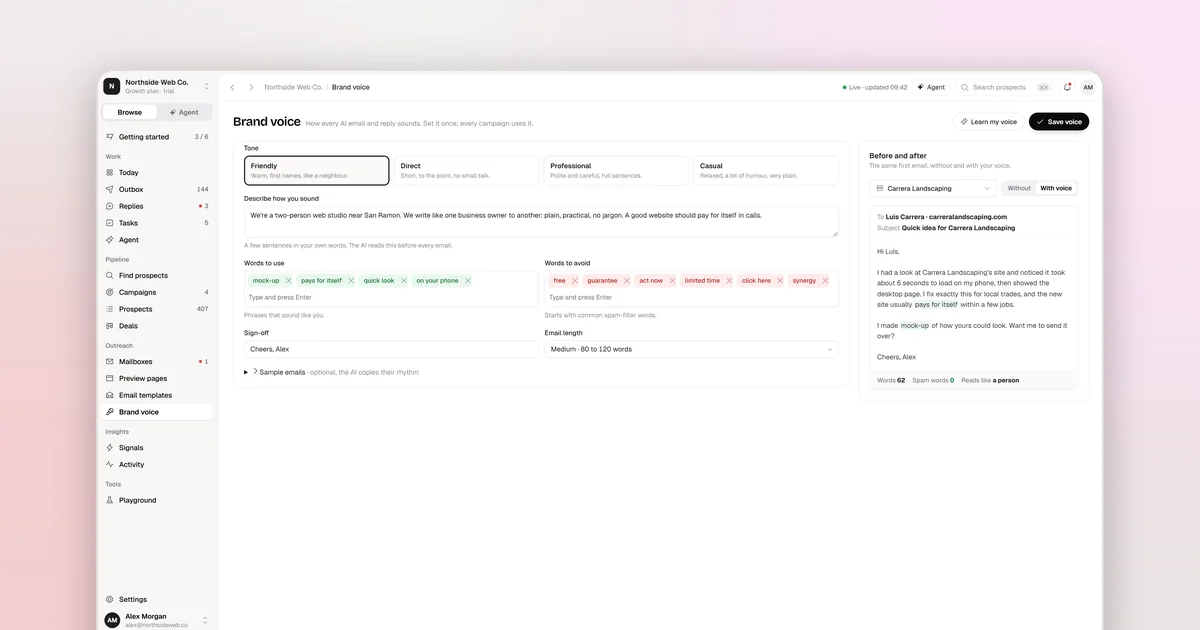
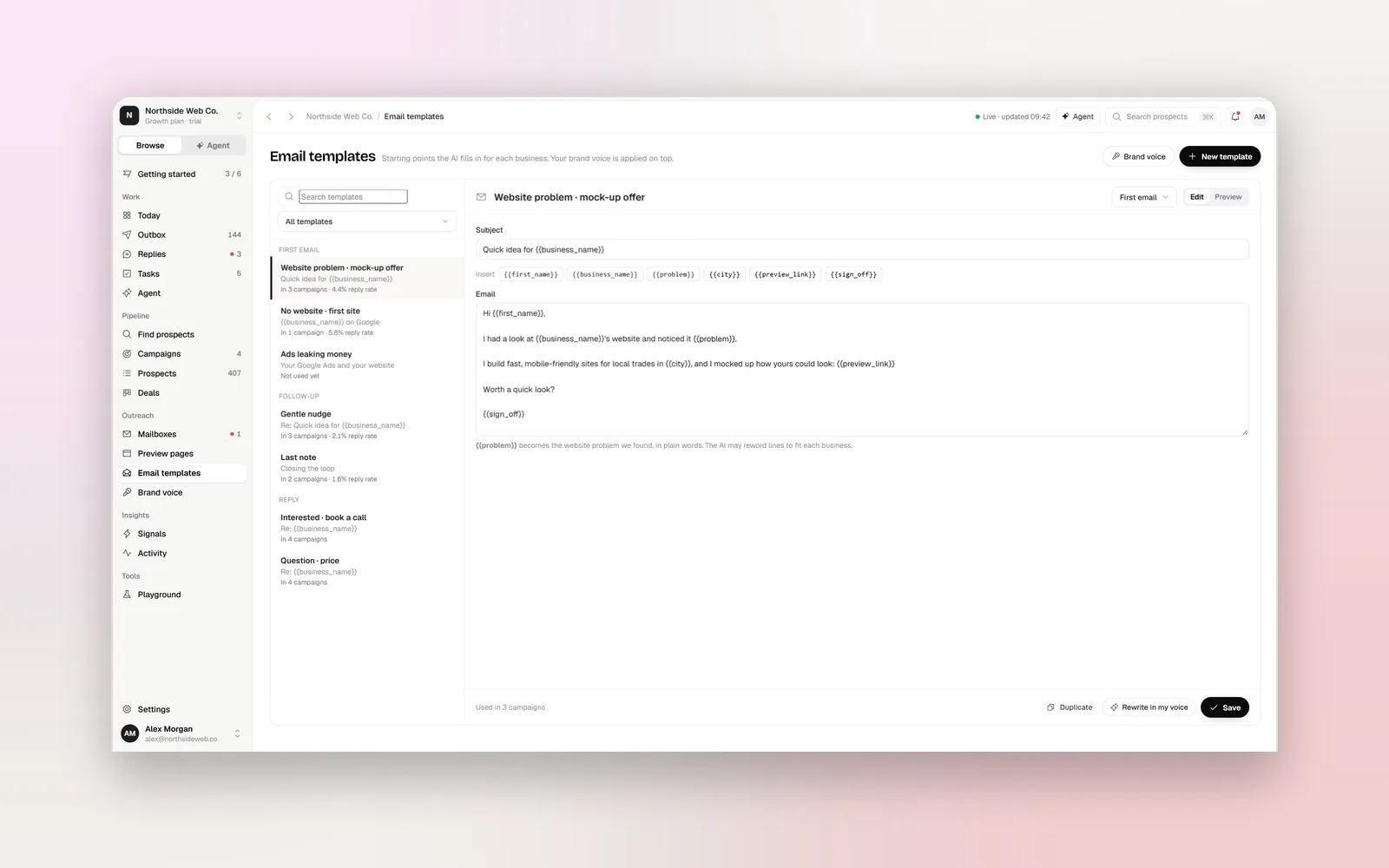
WarmyBiz takes the same idea further. It checks each business's website, writes the email in your brand voice and adds a footer with your postal address and a one-click unsubscribe, so the compliance part of the signature is handled. You approve every email before it sends.