First, decide which number you want
Most businesses have one public main line, and that is the number you should use. Owners' personal mobiles, direct lines and after-hours numbers are a different thing, with different rules about how you can contact them.
Agencies and freelancers who sell to local businesses usually want the number for one of three reasons: to call the business, to match a lead across two lists, or to check whether the website makes the number easy to tap on a phone. All three start with the same public sources. The methods to find business owner phone number details mostly lead back to the main line too, because in a small business the main line often rings on the owner's phone.
How to find a business phone number: five free sources
If you need to find a phone number for a business, these five sources cover almost every case. Check two, and if they agree, you are done.
1. The business's website
Look in the header, the footer and the Contact page. On a well-built site the number is a tap-to-call link, so it dials when tapped on a phone. Some sites use a call-tracking number that differs by visitor or by ad; that is fine to call, but it may not match the number on the business's listings.
2. Google Maps and Google Business Profile
Search the business name and city in Google Maps. The profile shows the phone number, hours and website, and it is the number most customers call. If two businesses have similar names, check the address and the category before you trust the match.
3. Other maps and directories
Apple Maps, Bing Places, Yelp, the Better Business Bureau and trade directories all list phone numbers. They are useful as a second source, especially when the website is down. Directories can keep an old number for years, so trust the most recent one when they disagree.
4. Social profiles
Facebook business pages, Instagram business accounts and Nextdoor pages often show a call or contact button. For very small businesses with no website, social profiles can be the only public place to find business phone number details. Check when the page last posted.
5. The business itself, by email or form
If none of the above gives you a number you trust, use the contact form or the published email address and ask for the best number. It takes longer, but it is the one route that always gives you the number the business wants you to use.
Identify a business from a phone number: three ways
Sometimes you have it the other way round: a missed call, a number in an old spreadsheet, or a lead list where the business name is wrong. When you need to find business by phone number, try these in order.
6. Search engines
Search the number in quotes in two formats, for example "(512) 555-0142" and "512-555-0142". If a business publishes the number on its site or a listing, it usually appears on the first page. Ignore pages that exist only to collect spam reports; they rarely know who owns the number.
7. Maps and directories, in reverse
Paste the number into the Google Maps search box. Maps often matches a business listing by its phone number. Some directories let you search by phone as well. This is the most reliable way to find a business from a phone number when the business has a public listing.
8. Caller-ID apps
Caller-ID apps and the spam filters built into many phones label incoming calls from known businesses. They are handy for deciding whether to pick up, but the labels are partly crowd-sourced, so treat them as a hint. Read an app's permissions before you install it; some ask to upload your contacts.
Compare the sources
Each source is good at something different. This is how they compare:
| Source | Direction | Best for | Watch out for |
|---|---|---|---|
| Business website | Business → number | The current main line, often as a tap-to-call link | Call-tracking numbers that change by visitor |
| Google Business Profile | Both | The number customers actually call | Edits by the public can be wrong |
| Other maps and directories | Both | A second source to confirm the first | Old numbers that were never removed |
| Social profiles | Business → number | Small businesses with no website | Pages that stopped being updated |
| Search engines | Number → business | Numbers published anywhere on the web | Spam-report sites with no real data |
| Caller-ID apps | Number → business | Labelling an unknown incoming call | Crowd-sourced labels; app permissions |
Check the number before you use it
A number that is wrong costs you more than a missing one: a call to the wrong business, a lead merged with someone else's, or an email that quotes a number the owner stopped using years ago. Run through this checklist before a number goes into your list:
- Two sources agree. The website and the Google profile show the same number, or a directory confirms one of them.
- The area code fits. A local plumber with an area code from another state may have moved, or the number may belong to an answering service or a lead-selling company.
- It is the business, not a middleman. Some directory listings show a tracking number that routes through the directory, or a number for a referral service that sells the lead to whoever pays.
- Toll-free and tracking numbers are noted. They are fine to call but poor for matching records, because the same business can have several.
- It is stored in one format. Save every number the same way, for example with the country code and digits only, so two lists can be matched later.
- The date is recorded. Note where and when you found the number, so you can tell which source to trust when they disagree next year.
Should you call or email local business owners?
Both work, for different reasons. A call is fast and personal, and some trades still prefer the phone. But owners of local service businesses are often on a job site, in a meeting with a patient or driving, and a cold call usually lands at a bad moment. An email can be read when they have a minute, and it can show evidence, such as a screenshot of their site on a phone, that a call cannot.
Many agencies email first and call only after a reply, or call the main line to confirm the owner's name before writing. Whichever you choose, the US rules for calls and texts are stricter than for email. This is a general summary, not legal advice:
- The TCPA (Telephone Consumer Protection Act) restricts calls and texts made with an autodialer or a prerecorded or artificial voice, especially to mobile numbers. Marketing messages of this kind generally need the recipient's prior express written consent.
- Texts count as calls under the TCPA. A cold marketing text to a mobile number without consent is a real risk.
- The National Do Not Call Registry covers residential and mobile numbers. Many small business owners use their mobile as the business line, so check before calling.
- State laws can add their own limits on calling hours, registration and consent. Some are stricter than the federal rules.
- Keep a do-not-call list and honour every request to stop, by phone or by email.
If you plan to call or text at any scale, speak to a lawyer who knows the TCPA and your state's rules first. For email, the local business leads guide covers sourcing, qualifying and following up.
How WarmyBiz handles phone numbers
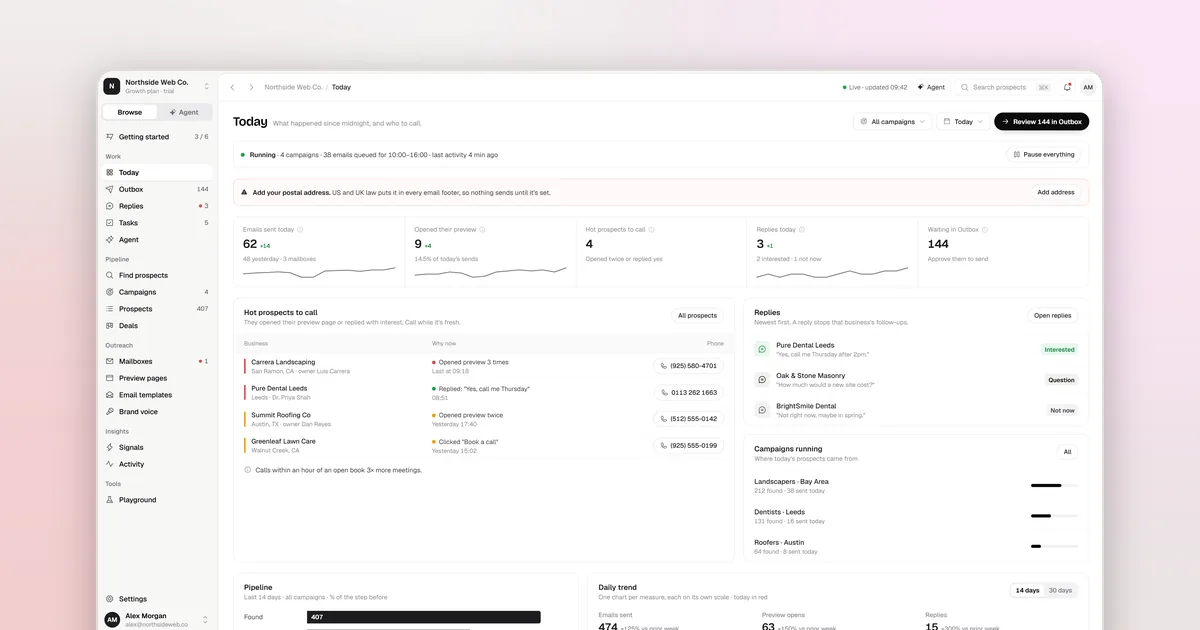
WarmyBiz is built for agencies and freelancers who prospect local businesses by trade and city. It is not a dialler, but it does collect the number and check how the website handles it:
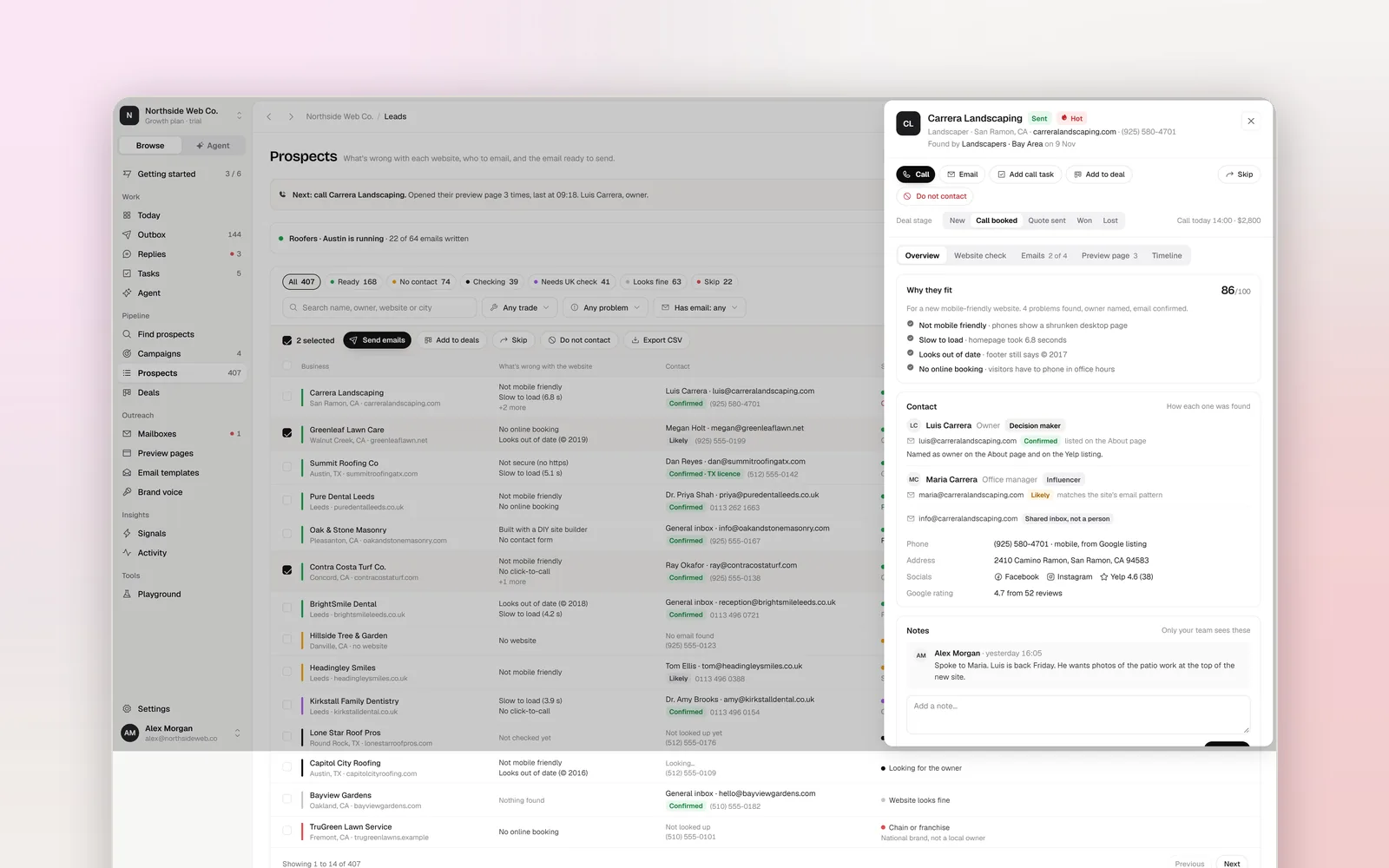
- It pulls the public business phone from listings (Overture Maps data, Google Maps through your own DataForSEO key, or a CSV you import) and from the business's own website, preferring tap-to-call links and falling back to numbers in the page text.
- It checks for click-to-call. One of the 26 website signals it checks is whether the phone number is a tappable link on mobile. If a business runs ads to a site without one, that counts toward its "ad spend leaking" signal.
- It uses the phone to match records, for example when merging an imported CSV with existing leads.
The AI Lead Finder Agent does this for a whole trade and city at once. For a single site, the free Website Grader shows whether the number is tappable, with the rest of the checks.